
7 Common Asphalt Repair Mistakes And How to Avoid Them

Many property owners unknowingly make critical errors during asphalt repair that shorten pavement life and increase long-term costs. Common missteps include treating small cracks as minor issues, relying on cold patch for permanent pothole repair, skipping proper surface cleaning, or failing to address underlying drainage problems. In Canada’s harsh climate – where freeze-thaw cycles wreak havoc on driveways and parking lots – these oversights can quickly turn minor damage into major structural failure. Addressing issues early with the right techniques and materials is essential for durable, cost-effective results.
From coast to coast, Canadian property owners face a relentless battle against pavement deterioration. Snow, ice, heavy rainfall, and temperature swings create the perfect storm for cracks, potholes, and surface raveling. What starts as a hairline fracture in your driveway can, within months, become a safety hazard and an expensive repair job. Unfortunately, well-intentioned fixes often do more harm than good – especially when temporary solutions are mistaken for lasting ones. Understanding the difference between a quick bandage and a proper fix is key.
For those tackling surface damage for the first time, learning the fundamentals of pothole patching can prevent repeat failures and protect your investment. With the right approach, even aging asphalt can be restored to safe, functional condition without unnecessary expense.
7 Common Asphalt Repair Mistakes (And How to Fix Them)
Even well-meaning property owners and facility managers can unintentionally undermine their pavement’s longevity by repeating preventable errors. Whether you’re handling a residential driveway repair or maintaining a commercial lot, avoiding these seven pitfalls can mean the difference between a five-year fix and a five-month one.
Mistake #1: Ignoring Small Cracks
Hairline cracks may seem harmless, but they’re the entry point for water – the primary enemy of asphalt. Once moisture infiltrates the base layer, it weakens the foundation, leading to potholes and structural failure.
Fix it: Seal cracks wider than 3 mm early using a high-quality rubberized crack filler. This simple step is a cornerstone of effective pavement repair and prevents minor issues from escalating.
Mistake #2: Using Cold Patch as a Permanent Fix
Cold patch asphalt is convenient – it’s easy to apply and available year-round. But it’s designed for temporary pothole repair, not long-term solutions. It lacks the binding strength and durability of hot-mix asphalt and often washes out or crumbles within months.
Fix it: Reserve cold patch for emergency winter fills. Plan for a proper hot-mix asphalt patching job in spring or summer when conditions allow for optimal adhesion and compaction.
Mistake #3: Skipping Surface Preparation
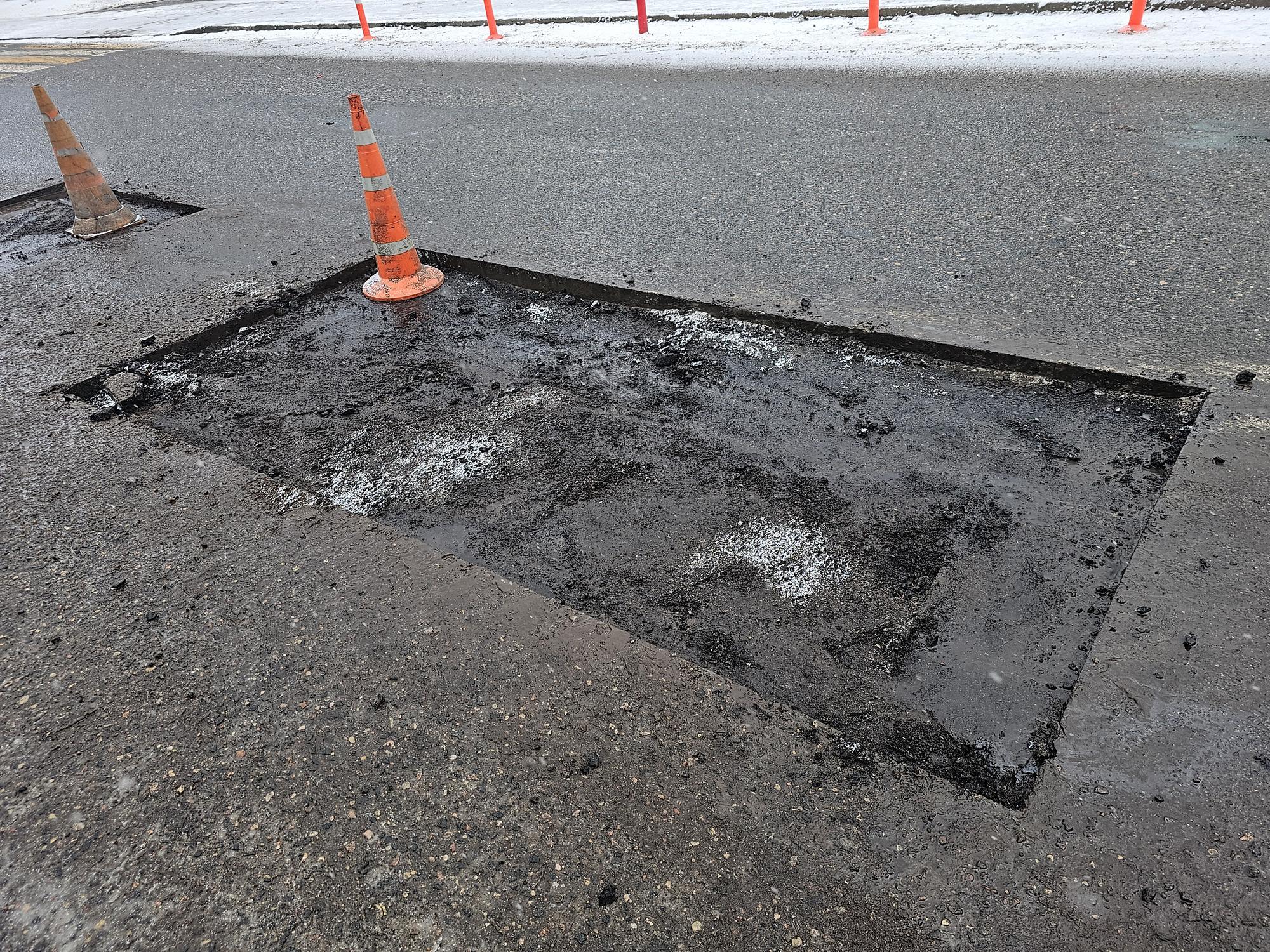
Throwing patch material into a dirty, wet, or debris-filled hole guarantees poor bonding. Loose gravel, oil residue, or standing water prevents the new material from integrating with the existing surface.
Fix it: Always clean the area thoroughly – remove all loose material, dry the cavity, and square off crumbling edges to create a stable “keyway” for the patch to lock into.
Mistake #4: Poor Compaction Techniques
A loosely packed patch settles quickly, creating a depression that collects water and invites repeat damage. Many DIYers tamp material by foot or with inadequate tools, leaving air pockets and weak spots.
Fix it: Use a hand tamper or plate compactor to firmly compress the patch in thin, even layers – ideally no more than 5 cm at a time – to ensure density and longevity.
Mistake #5: Neglecting Drainage Issues
Puddles on your driveway or parking lot aren’t just inconvenient – they’re red flags. Poor grading or clogged drains cause water to pool, accelerating deterioration at the surface and base levels.
Fix it: Evaluate slope and drainage before any asphalt repair. Reprofile low spots or install edge drains if needed. Remember: no patch lasts long in standing water.
Mistake #6: DIY Without the Right Tools
While small jobs can be managed independently, larger or recurring damage often requires professional-grade equipment and materials. Guessing on mix types, depth, or curing time leads to inconsistent results.
Fix it: Assess your skill level honestly. For anything beyond minor crack sealing or a single small pothole, consider consulting a specialist – especially when structural integrity is in question.
Mistake #7: Delaying Professional Assessment
Waiting until the pavement is riddled with potholes or heaving from base failure turns a manageable issue into a full reconstruction project. Early expert input can identify hidden problems like subgrade erosion or poor compaction from the original installation.
Fix it: Schedule a pavement evaluation every 2–3 years, or immediately after severe weather events. Preventive insight is far cheaper than reactive replacement.
To help clarify the difference between short-term and lasting solutions, here’s a quick-reference comparison:
|
Factor |
Temporary Fix |
Permanent Solution |
|
Best Used In |
Winter emergencies |
Spring, summer, or early fall |
|
Lifespan |
Weeks to a few months |
3–7+ years (with proper prep) |
|
Adhesion to Existing Surface |
Weak |
Strong (when applied correctly) |
|
Compaction Required |
Minimal |
Essential – layered and mechanical |
|
Ideal For |
Quick hazard mitigation |
Durable driveway repair or commercial lots |
Pro Tips for Long-Lasting Pavement Repairs
Avoiding common mistakes is half the battle; the other half lies in adopting smart, proactive habits that maximize the lifespan of your asphalt. These field-tested strategies go beyond basic patching and address the full lifecycle of pavement care – especially critical in Canada’s variable climate.
- Time Repairs Strategically: The best window for durable asphalt repair is late spring through early fall, when daytime temperatures consistently stay above 10°C. Warm, dry conditions allow materials to bond properly and cure evenly. Avoid patching during rain or freeze-thaw transitions.
- Prioritize Full-Depth Repairs for Recurring Damage: If the same spot keeps failing, the issue likely runs deeper than the surface. Full-depth patching – where both asphalt and compromised base are replaced – offers a structural reset that surface-level fixes can’t match.
- Sealcoat Every 2–3 Years: Once your pavement is in good condition, protect it. Sealcoating shields asphalt from UV rays, oil spills, and water penetration. Think of it as sunscreen for your driveway – it won’t fix cracks, but it dramatically slows aging.
- Maintain Clean Edges and Shoulders: Overgrown grass or soil buildup along pavement edges traps moisture and encourages edge cracking – a common precursor to full breakdown. Keep borders clear and slightly sloped away from the surface.
- Document and Monitor Problem Areas: Keep a simple log of where repairs were done, when, and what method was used. This helps spot patterns (e.g., repeated failures near a downspout) and informs smarter decisions during future maintenance cycles.
- Match the Material to the Job: Not all asphalt is the same. High-traffic zones like commercial entrances need denser, more durable mixes than a quiet residential lane. Using the right blend for your specific pavement repair need improves performance and longevity.
- Don’t Overlook Curing Time: Even after a perfect patch, driving over it too soon can undo all your work. Most hot-mix repairs need 24–48 hours to fully set, depending on temperature and thickness. When in doubt, wait an extra day.
These practices won’t just extend the life of your pavement – they’ll reduce long-term costs, enhance safety, and maintain curb appeal. Remember, the goal isn’t just to fix what’s broken, but to prevent the next break before it happens.
Final Thoughts: Invest in Quality, Not Quick Fixes
Asphalt is a resilient material, but it’s not indestructible. Its durability depends less on the product itself and more on how it’s maintained. Too often, property owners opt for the fastest or cheapest solution, only to face the same problem – or a worse one – within months. In Canada’s demanding climate, cutting corners on asphalt repair mistakes like poor compaction, inadequate drainage, or improper material selection almost guarantees premature failure.
The smarter path is to treat pavement like any other critical infrastructure: inspect it regularly, address issues early, and use methods proven to last. Whether it’s a cracked driveway, a pothole-ridden parking lot, or a commercial access road, the principles of sound asphalt repair remain the same – proper prep, quality materials, skilled execution, and ongoing care.
About The Author

 5 Questions to Ask a Plumbing Company Before Hiring Them For Home Plumbing Repairs
  Stopping the Leak: How Hidden Plumbing Problems Drain Your Bank Account
  How Modern Residential Plumbing Solutions Reduce Long-Term Repair Costs