
Custom Cabinet Design and Installation Guide for Homeowners
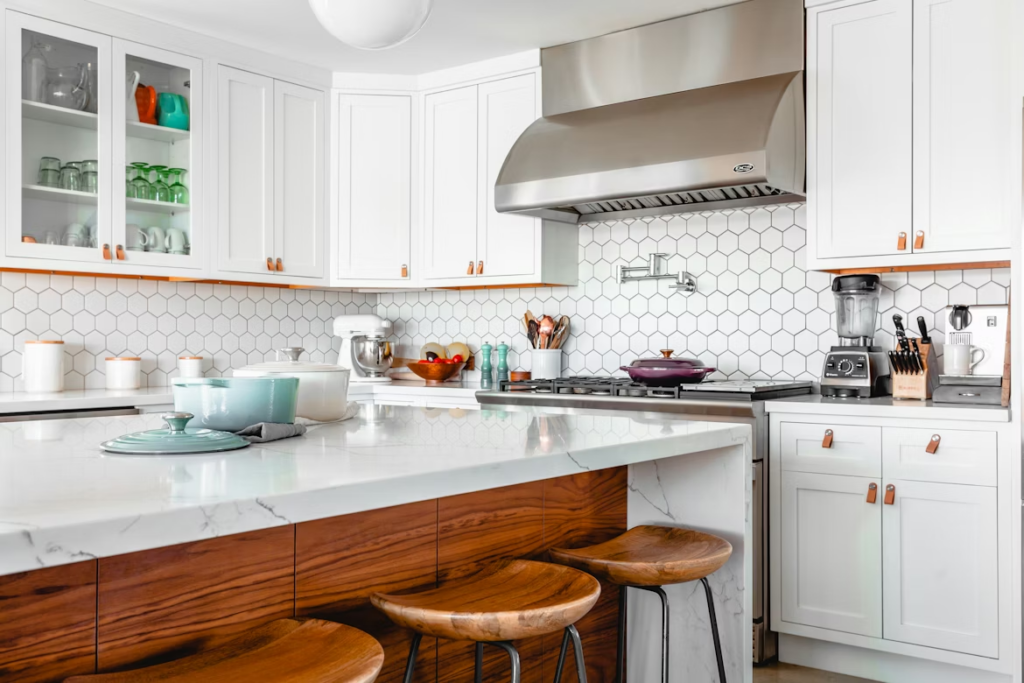
Custom cabinet design and installation tops the list of wise investments in your home.
It pays you back year after year. When you have the proper custom cabinet design installation you can:
- Maximise every inch of storage
- Add serious resale value
- Get a kitchen or bathroom that fits your life
And you won’t fall into the most common mistake homeowners make…. Installing outdated, cookie cutter cabinets.
What you’ll discover:
- Why Custom Cabinets Beat Stock Every Time
- The Custom Cabinet Design Process
- How To Plan Your Cabinet Installation
- Common Mistakes To Avoid
Why Custom Cabinets Beat Stock Every Time
Custom cabinets are built specifically for your space, your style, and your needs.
Custom cabinets are different from stock cabinets. They come in any size to fit any space — even funny corners and walls.
That’s why they’re becoming more popular with homeowners than ever before. In fact, per the 2025 U.S. Houzz Kitchen Trends Study, 45% of cabinets installed are custom cabinets.
When investing in custom kitchen and bathroom cabinets there are benefits that go way beyond aesthetics. You will enjoy an actual quality and functional difference – daily.
A custom cabinet design installation can help you:
- Make use of every inch of space: Because custom cabinets are made to fit your room exactly, they’ll fit into odd spaces with out-of-square walls. Stock cabinets will always leave gaps.
- Pick materials you love: You choose the wood species, finish, hardware and style of door. There are no limits.
- Increase home value: Kitchen remodels rank highest among homeowners with a 10 Joy Score from the 2025 NAR/NARI Remodeling Impact Report.
Pretty good reasons, right?
Alright, let me show you EXACTLY how to build and install custom cabinets correctly!
The Custom Cabinet Design Process
Most homeowners think cabinet design is about picking a colour. It’s not.
Schematic Design is where you determine how your space will function. Don’t skip this step or you will regret it.
Measure Your Space (Twice)
Your starting point is getting exact measurements of the room.
Take measurements of your walls, ceiling height, windows, door swings and any plumbing or electrical outlets which will influence where cabinets will go.
Then measure again.
Pros will always take measurements themselves, but understanding your space will allow you to have a more informed conversation with your designer.
Pick Your Layout
Before you think about style, think about function.
What will the room actually be used for? Where would you have the most use for storage? What appliances need to be concealed and which need to be accessible?
Good layouts include:
- Plenty of counter space near the cooktop and sink
- Deep drawers for pots and pans
- Pull-out organisers and soft-close hinges
- Tall pantry cabinets for dry goods
Don’t rush this part. Layout mistakes cost the most to fix after installation.
Choose Your Materials
Now the fun part — picking your materials.
Decide on wood species, style of door, finish and hardware to use. Popular woods are maple, oak and cherry if you use solid wood. Get a plywood box instead of a particle board box. They are much stronger. Good hinges and drawer slides are also a must.
Tip: Keep cabinets neutral and use paint and hardware to customize. Styles change, but solid cabinets should easily last 20+ years.
How To Plan Your Cabinet Installation
Once your design is locked in, it’s time to plan the installation.
Here’s a clue… most cabinet projects take longer than anticipated. Lead times range from 8-16 weeks.
Set A Realistic Budget
Custom cabinets are not cheap. But they don’t have to break the bank either.
According to Angi’s 2025 data, homeowners spend between $1,978 and $11,043 on average for cabinet installation. The price for high-end custom cabinets can exceed $30,000.
Your budget should include:
- The cabinets themselves
- Hardware (hinges, pulls, knobs)
- Installation labour
- Countertops and backsplash
- Plumbing or electrical changes
Cabinets alone usually take up 30-50% of a total kitchen remodel budget. Plan accordingly.
Prepare Your Home
Before installation day, clear out the old cabinets completely.
Empty it out. Remove everything including your dishes, pots and pans, and food from the pantry. Remove the existing cabinetry (or have the installers do that for you).
You’ll also want to:
- Check for damage to walls behind old cabinets
- Make sure plumbing and electrical are up to code
- Plan a temporary kitchen setup
Hire A Professional Installer
This is not a DIY job for most people.
Installing custom cabinets is all about accuracy. If one cabinet is out of level, the entire line will be off. Cabinets that are not even will cause counters to become crooked. Crooked counters can mess up the look of your whole kitchen.
A professional installer will:
- Level every cabinet perfectly
- Secure them to wall studs
- Handle tricky plumbing or electrical adjustments
- Install hardware and doors so they line up
Hire someone who has done this work before. Ask for references. Check reviews.
Common Mistakes To Avoid
Watch out for these mistakes most homeowners run into.
- Rushing through design: Put more time into design and you’ll avoid costly rework later.
- Neglecting ventilation: Allow cabinets above ovens and cooktops to have clearance. Don’t cover your range hood.
- Don’t skimp on soft-close hinges: They’re a bit more expensive, but they’re way more durable and they save your cabinets from slamming ruin.
- Trying to match hardware to trends: Trends shift quickly. Choose hardware that you love, rather than what feels trendy at the moment.
- Not planning for lighting: Having lights underneath your cabinets makes such a huge difference in a kitchen. Don’t wait until after you design your kitchen to plan for them.
Nine times out of ten cabinet issues are due to inadequate planning. Take your time, make wise choices and you’ll have cabinets you enjoy for many years.
Final Thoughts
Custom cabinets allow you to have something stock cabinets never will — a space designed to fit your lifestyle.
Sure, they’re expensive. Sure, they take longer to install. But boy do they deliver. As promised:
- Measure your space carefully (twice)
- Plan the layout around how you use the room
- Pick quality materials and hardware
- Budget realistically and add a buffer
- Hire a professional installer who knows their stuff
Kitchen & bathroom cabinets are one of the rare remodeling projects that both ADD VALUE TO YOUR HOME and ENHANCE YOUR DAY TO DAY LIFE. Design them correctly, choose the proper installer, and your cabinets can become one of your best investments.
About The Author

 Kenneth Stevenson’s Interior Design Articles
  Your Complete Guide to Building a Healthier Room for Better Sleep
  Make Your Bathroom Pop: Quick, Funky Curtain Ideas To Rescue Boring Spaces