
How to use wall panels to transform any room
Why wall panels are having a moment
Walk into a thoughtfully designed home and you will notice that the walls rarely feel like an afterthought. Instead of blank expanses of paint, there is depth, rhythm and texture. Wall panels are a big part of that shift. They add architecture to flat drywall, soften acoustics in busy spaces and create a focal point that anchors the entire room.
Design lovers are turning to slatted, fluted and geometric panels because they do three jobs at once. They upgrade the look of a space, subtly improve how it sounds and help zone open layouts without building new walls. On a practical level, they also hide small imperfections and can protect high-traffic surfaces in hallways or behind sofas and beds.
Choosing the right panel style for your space
Before thinking about colors or layouts, it helps to understand the basic panel styles available. Slim vertical slats bring a calm, linear rhythm that works especially well in contemporary living rooms, bedrooms and home offices. Fluted panels have a softer, rounded profile that reads a bit more sculptural and can feel luxe in dining rooms or entryways. Hexagon or mosaic formats introduce pattern and are often used as art-like feature installations.
Material and finish matter just as much as profile. Warm oaks and walnuts pair beautifully with neutral textiles and soft lighting, while deep black or smoked tones instantly add drama and contrast. Many modern systems combine real wood veneer with an acoustic backing, which can be useful in echo-prone spaces with hard floors and minimal curtains. If you’re comparing different acoustic wall panels for your project, it’s worth looking at designs that balance sound absorption with visual appeal rather than focusing on appearance alone. Brands like Akuwoodpanel focus on this balance between aesthetics and sound performance, which is why these designs often appear in both homes and boutique offices.
Living room feature walls that feel intentional
The living room is often where people experiment first. A slatted feature wall behind the sofa or TV can frame the seating area and make the room feel more finished. Vertical lines draw the eye upward, which is helpful in spaces with lower ceilings. If your room is long and narrow, consider panelling the shorter wall to visually correct the proportions.
Color and contrast guide how bold the feature feels. Natural oak slats against a soft white wall read airy and Scandinavian, while walnut against a clay-toned paint feels rich and cocooning. You can also play with asymmetry. Instead of panelling from corner to corner, stop the panels slightly off center, then balance the composition with artwork or shelving on the other side.
Integrating media units and storage
Many people worry that a feature wall will limit furniture placement. In reality it can help organize it. Panels behind a TV visually soften the black rectangle and reduce glare, particularly when combined with a matte finish. Floating media units or low sideboards in a similar wood tone can appear to merge with the wall, which keeps the focus on the whole composition rather than on individual pieces.
If you need extra storage, integrate slim shelves or a niche within the panel area. This works especially well with modular slat systems, where you can leave a section clear, paint it in a contrasting color, and use it to display books and ceramics. The key is to keep styling simple so the texture of the wall remains the star.
Bedrooms that feel like boutique hotel suites
In bedrooms, wall panels help create a sense of calm and enclosure. A full-width panelled headboard wall visually widens the room and can replace the need for a large standalone headboard. Soft tones like natural oak or light ash pair nicely with linen bedding and low, warm lighting. If you prefer a more dramatic mood, darker wood behind the bed set against lighter side walls can create that warm, cocoon-like effect often seen in hotel suites.
Practical details matter here. Panels can hide power outlets and cable routes for bedside lighting, which keeps things tidy. Some homeowners extend the panels along the ceiling for a few feet above the bed to form a “canopy” effect. Others run the panels only halfway up the wall and finish with paint above, which keeps the look lighter and can make sense in compact rooms.
Sound and sleep quality
Bedrooms benefit from improved acoustics more than most spaces. Hard surfaces reflect sound, which can make street noise or footsteps in a hallway feel more intrusive than they need to. Textured wooden panels with acoustic backing help break up sound reflections and absorb part of that noise, which supports better sleep. Even a partial installation, such as behind the bed and along one side wall, can noticeably soften echoes if you have timber floors or minimal curtains.
Home offices and creative studios with better acoustics
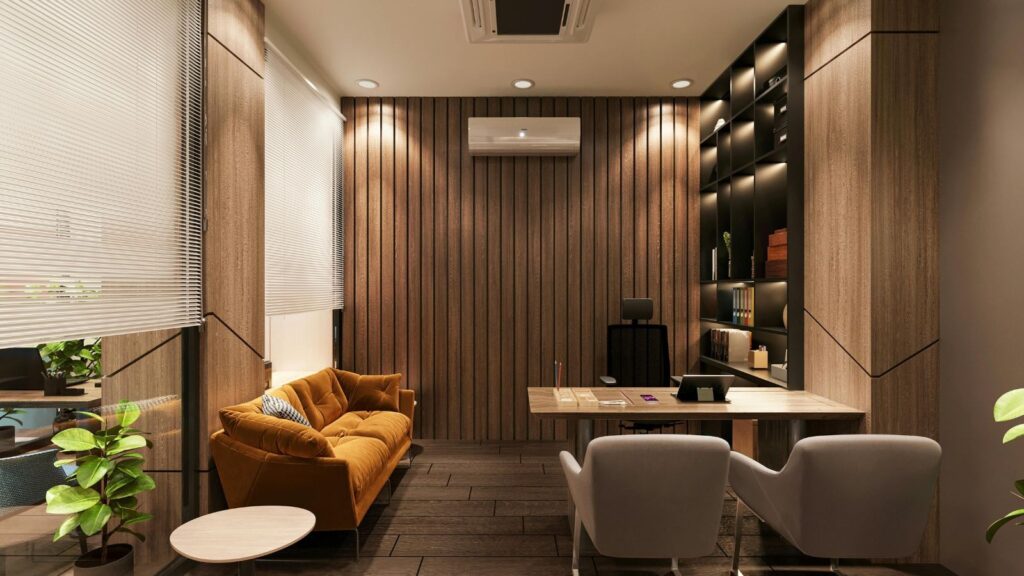
With more work happening from home, the design of office corners and studios has moved higher on the priority list. Wall panels earn their place here because they solve both visual and acoustic challenges. Many of the same designs used as the acoustic panels for meeting rooms can also improve sound quality in home offices. A panelled backdrop behind your desk instantly makes video calls look more professional and composed. At the same time, the texture helps reduce the hollow echo that microphones often pick up in sparsely furnished rooms.
For small offices, a single panelled wall is usually enough. Position it behind or adjacent to your main seating so that it acts as the background in your usual camera angle. In shared spaces or studios, alternating solid panel sections with open shelving keeps storage flexible without sacrificing acoustic benefits.
Designing for focus and creativity
Colors and materials can influence how focused or relaxed you feel while working. Light, neutral panels paired with clean white or pale gray walls encourage clarity and focus, which works well for analytical tasks. Warmer, mid-toned woods can be better suited to creative work where you want the room to feel welcoming and a bit softer. A subtle play of light and shadow across the slats throughout the day keeps the space from feeling static, which many people find inspiring.
Hallways, kitchens and other high-traffic zones
Circulation spaces are often overlooked, yet they offer perfect canvases for panelling. In a hallway, panels protect the wall from bags, shoes and everyday scuffs, all while adding texture to a typically narrow and plain space. Running slats vertically can make a short hallway feel longer, while horizontal lines can visually widen a tight corridor.
In kitchens, panels are rarely used as full splashbacks but work beautifully on dining nooks, island backs or breakfast corners. They bridge the gap between the more functional cabinetry zone and the softer living area in open-plan layouts. When choosing finishes in busy spaces, think about durability and cleanability alongside design. Slightly darker tones or textured veneers tend to hide fingerprints and bumps better than very pale, flat finishes.
Mixing wall panels with other finishes
The most successful interiors rarely rely on a single material. Panels look best when they are part of a considered mix that might include painted surfaces, stone, textiles and metal accents. If your panel has a pronounced grain, balance it with simpler, matte finishes elsewhere. If the profile is very minimal, like fine slats with sharp lines, you can afford to introduce more pattern in rugs or cushions.
Lighting is the final layer that brings the wall to life. Grazing light that washes down the surface from a ceiling track or slim wall lights will emphasize the relief, making every groove or facet more pronounced. Softer, diffused light is better if you prefer a quieter, more understated look. Trying a few lighting scenes before finalizing panel placement often leads to smarter, more satisfying results.
About The Author

 Epoxy Emerald Cloud Pattern: Fast, Gorgeous Results With Rapidirect (2026 Guide)
  How to Select an Opal-Color BBQ from RapidHomeDirect — 7 Practical Tips for 2026
  MyWirelessCoupons: How To Slash Phone Bills And Save On Devices In 2026