
Why the Kitchen Has Become the Real Social Centre of the Home
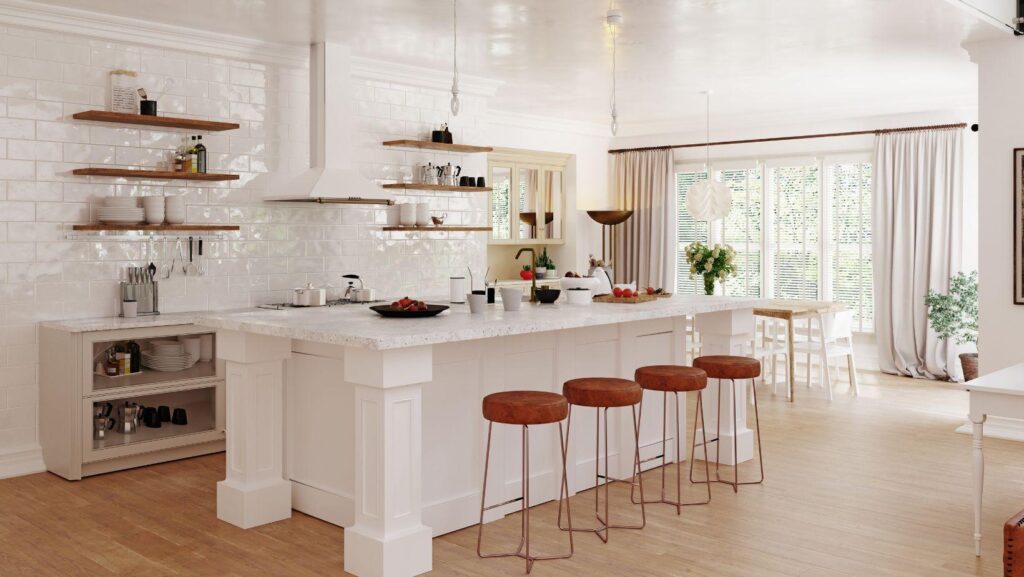
For a long time, the living room was treated as the social heart of the house. It was where guests sat, where family time happened, and where the “good furniture” tended to live. These days, that role has shifted. In a lot of homes, the kitchen has quietly become the place where everyone actually ends up, even when there’s a perfectly comfortable lounge room only a few metres away.
Part of that comes down to how open-plan homes are designed, but a lot of it is simply behavioural. People like being near the food, near the action, and near whoever is cooking. A kitchen island or breakfast bar often becomes the unofficial meeting point for the whole household, which is why seating choices such as kitchen counter stools can have such a big impact on how usable and inviting the space feels.
People naturally gather where something is happening
A kitchen is rarely passive. Someone is chopping, pouring, making coffee, unpacking groceries, putting dinner together, or sneaking a snack. That activity gives the room energy, and people tend to gravitate toward it.
You see it at parties all the time. Someone carefully arranges the living room so everyone can sit comfortably, then half the guests end up standing around the kitchen bench anyway. It’s not because the kitchen is necessarily more beautiful. It’s because that’s where conversation feels easiest and most spontaneous.
The same thing happens in everyday family life. Kids do homework at the bench while dinner is being made. Someone sits with a laptop and answers emails. A partner gets home and leans against the island to talk about the day. The kitchen becomes a place for little overlapping moments rather than one specific activity.
That’s a big reason modern kitchens are being designed with social use in mind rather than purely around cooking efficiency.
Seating changes whether people stay or move on
There’s a big difference between a kitchen bench people can stand beside and one that actually encourages them to settle in.
Good counter seating turns the kitchen into somewhere people can pause without getting in the cook’s way. It creates a place for quick breakfasts, casual drinks, homework, conversations, and the kind of half-meal that happens when someone says they’re “not really hungry” and then starts stealing food from everyone else.
Comfort matters here more than people sometimes expect. A stool that looks great but feels awkward after five minutes won’t get much use. Seat height, foot support, back support, and the amount of clearance under the bench all make a difference.
Spacing matters too. Cramming too many stools along an island can make the area feel cluttered and uncomfortable. It’s usually better to have fewer seats that people can actually use properly than to squeeze in an extra one just because there’s technically enough room.
Open-plan living changed the kitchen’s role
Once kitchens started opening into dining and living areas, they stopped being hidden workspaces and became part of the visual experience of the home.
That means the kitchen furniture has to work harder aesthetically as well as practically. Stools, pendant lights, cabinetry, benchtops, and nearby dining furniture all need to feel related, even if they’re not perfectly matched.
A row of stools is often one of the first things you see when you enter an open-plan room, so they can influence the overall style more than expected. Timber can bring warmth, metal can make the space feel sharper and more contemporary, upholstery can soften a highly polished kitchen, and curved shapes can break up rooms dominated by straight cabinetry.
The goal isn’t to make everything identical. In fact, a little contrast often makes the room more interesting. What matters is that the pieces feel intentional.
The kitchen now handles multiple parts of the day
One reason the kitchen has become so socially important is that it adapts constantly.
At 7 am, the island might be a breakfast spot. At 10 am, it becomes a workspace. In the afternoon, it’s where school bags get dumped and snacks disappear. At night, it might be a prep surface, a drinks station, or the place where guests sit while dinner finishes cooking.
That flexibility is incredibly useful, but it also means the space needs to be comfortable across different activities. Lighting needs to work for both food preparation and conversation. Power points need to support appliances and devices. Seating needs to suit adults and kids. Surfaces need to handle constant use without feeling precious.
The best kitchens support these transitions without needing to be rearranged every few hours.
Social kitchens can still be functional kitchens
There’s a danger in designing a kitchen entirely around how it looks from the living room. It still needs to function as a kitchen.
People sitting at the island shouldn’t block drawers, appliances, or main work zones. The person cooking should be able to move between the fridge, sink, and cooktop without weaving around stools. Guests should have somewhere to sit without becoming accidental kitchen obstacles.
This is where thoughtful planning makes a huge difference. Even small choices, such as leaving enough space behind stools or positioning seating away from the busiest prep zone, can make the room feel much easier to use.
A social kitchen works best when people can be part of the action without actually being in the way.
The heart of the home moved closer to the bench
The kitchen has become more than the place where meals are prepared. It’s where days begin, conversations happen, people work, children hover, guests gather, and everyone somehow ends up even when they weren’t invited in.
That’s why the details around comfort, seating, layout, and flow matter so much. When a kitchen is designed for people as well as food, it becomes the kind of room that earns its place at the centre of everyday life.
About The Author

 Itzhak Ezratti on Building Communities That Last: A Founder’s Philosophy on
Long-Term Development
Itzhak Ezratti on Building Communities That Last: A Founder’s Philosophy on
Long-Term Development  Why Spartanburg Homeowners Keep Getting the Same Drain Clog and What It Could Mean
  Why Mobility Matters in the Kitchen