
What Size Septic Tank Do You Need for a Family Home?
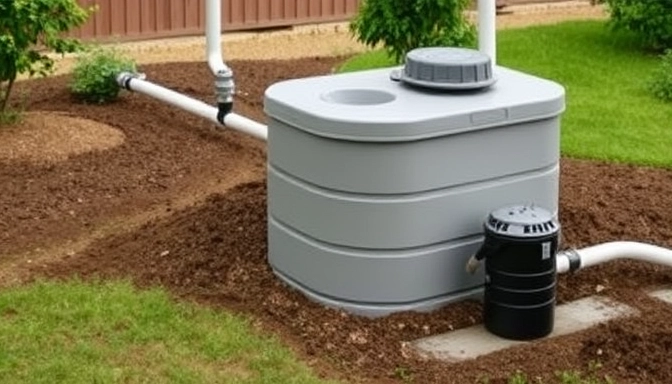
The size of your septic tank is not just a matter of technical detail, but has a direct impact on how efficiently your system functions. The larger your tank size, the more frequently it needs maintenance, and the longer it is likely to last.
In addition, an undersized tank will result in frequent water back up which means spending extra money on repairs. An oversized tank is wasted money. Sizing your tank requires looking at the way your household actually consumes water, and not guessing.
1.Consider Your Occupants
The number of occupants residing in your home is likely the largest factor that will dictate how large your septic tank needs to be. More people living in your home means that there will be significantly more volume of wastewater each day coming from showers, toilets, laundry, and dishwashing. If a homeowner has many frequent visitors or intends to have other family members move in at some point in time, these factors also should be taken into account for septic tank sizing.
2.Use Bedroom Count as a Guideline
Most Local Building Codes use Bedroom Count as a simple guideline for determining septic tank size. This allows builders to have a good estimate as to potential future occupants for the life of a home.
For instance, a 3-bedroom home typically will provide service to 4- 6 People, even if only one person lives there now. This method will help ensure that the septic system has the capacity to handle any additional capacity in future.
3.Daily Water Consumption Makes Up the Final Layer
Home water usage patterns vary greatly. Efficiently using water at your home may reduce the impact of wastewater on your home’s septic system compared to a home with longer shower time and more laundry loads and dishes. If your family uses many gallons per day, a larger septic tank will assist your septic system to perform better and keep the drain field from becoming too full.
4. Don’t Forget Local Ordinances and Soil Types
Each area has different local minimum tank sizes that are dictated by the local ordinance and protective policies. Soil type is also a large factor in determining how large of a tank to install. For example, poorly draining or clay-type soils usually require larger tanks and additional system components to ensure they don’t fail. Two homes located in two different areas with similar structures may have completely different permitted systems based on their location.
5.From Calculations to Real-World Solutions
After determining appropriate capacity through calculations, you need to evaluate the physical layout/size of your tanks. At this point, standard liter size product catalogues with dimensions are very helpful. Catalogues or other sources that provide long-term solutions for septic systems can help compare and visualize all possible tank options that may work on your lot and installation site.
6.Professional Advice is a Must!
Even with all the information and resources that are accessible via the internet, they do not substitute the experience and knowledge of a trained professional who is licensed to install or design septic systems. A professional can provide a more complete evaluation of such things as your home’s dimensions, the amount of daily water used, soil conditions, and local codes and regulations. They can also help you find long-lasting septic solutions, which will help you avoid costly mistakes and keep your system working efficiently and reliably for many years to come.
Endnote
Choose an appropriately sized septic tank to ensure sufficient capacity to accommodate both existing and anticipated future usage. By having adequate capacity you will reduce the likelihood of experiencing problems with your septic system. To determine the size of the septic tank, refer to the local health department regulations for your area, the normal daily volume of water used by each occupant in your household, the total number of bedrooms and the type and texture of the soil where you will be installing your system.
While these examples should give you some guidance for how the drain field will perform under different circumstances, they are not hard and fast guidelines and there may be circumstances where additional requirements may be imposed by your local health department or other regulatory agency. Thus, always consult a qualified professional.
About The Author

 How a Small Roof Leak Can Mutate Into a Big Repair Bill
  Home Features and Finishes That Scream ‘Low-Maintenance’
  Top 4 Challenges of Managing Multiple Rentals