
How to Add Warmth and Texture to Modern Homes Without a Full Renovation
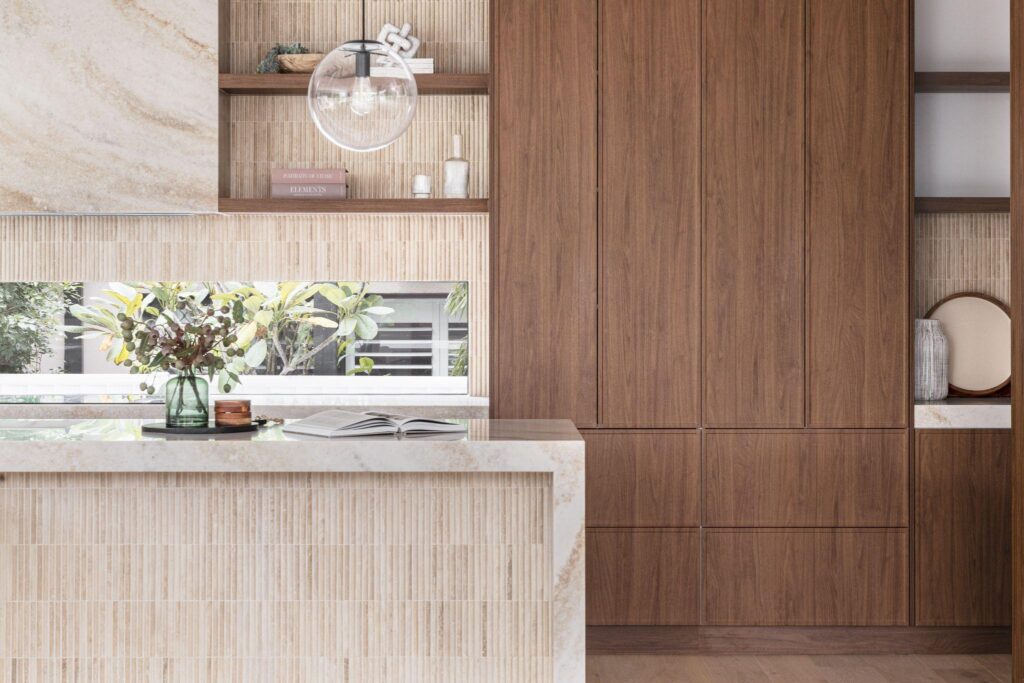
The good news is that shifting a space from cool and composed to warm and inviting doesn’t require a complete renovation. It requires better material choices, applied in the right places. Here’s how to do it without ripping everything out.
Layering Natural Materials

Bring warmth to a modern home with materials that feature natural variation. Timber, stone, linen, and clay look different depending on the light, the angle, and the time of day. This richness is something that uniform, factory-finished surfaces don’t offer.
Bringing in natural materials like timber, linen, and travertine tiles is one of the easiest ways to add warmth and subtle variation without overwhelming a space. Travertine, in particular, has seen a resurgence in both flooring and feature wall applications, with its naturally pitted surface and tonal range offering a softness that engineered alternatives struggle to replicate.
The key is restraint. You don’t need every surface to be natural, just enough to break the uniformity. A timber shelf against a plastered wall, or a stone benchtop alongside painted cabinetry, can be all it takes to create warmth through the contrast between materials.
Updating Surfaces

A full kitchen or bathroom renovation is expensive and disruptive. But a surface update, like swapping a splashback, re-tiling a feature wall, or replacing flooring in a single zone, can shift the entire feel of a room for a fraction of the cost.
The highest-impact surfaces are the ones you see and touch most often: the kitchen splashback, the bathroom floor, the entryway. These are the areas where a material change is immediately apparent, without requiring structural work or re-plumbing.
Stone-look and textured tiles are particularly effective here. They bring depth and tactile interest while sitting within the same installation footprint as whatever they’re replacing. It’s a renovation by substitution rather than demolition.
Bringing Warm Tones Back Into the Home

That cool grey palette that dominated interiors for years is giving way to something softer. Beige, sand, clay, terracotta, and warm whites create a sense of comfort that grey, no matter how carefully applied, struggles to deliver.
However, warm tones work best when the materials around them reinforce them. A sand-coloured wall reads warmer next to a timber floor than it does next to polished concrete. A clay-toned tile feels more purposeful when paired with brushed brass hardware than when paired with chrome.
The lesson is simple: colour and material need to work together. Choosing warm tones in isolation, without considering the surfaces and finishes they sit alongside, risks a palette that feels disconnected rather than resolved.
Mixing Textures for Depth
Texture is what separates a room that looks warm from one that actually feels it. And the most effective textured interiors aren’t the ones with the most going on, they’re the ones where contrasts are placed with intention.
Think about how a honed stone surface sits next to a ribbed timber panel or how a linen curtain falls against a rendered wall. These pairings create visual interest without adding clutter, and they give a room a quiet complexity that rewards a second look.
Materials with inherent character tend to do this work best. The grain in timber, the surface variation in stone, the weave in linen, these qualities aren’t decorative choices added on top; they’re part of the material itself, and that’s what makes them feel authentic.
Small Changes That Make a Big Difference

Not every update needs to involve a professional. Some of the most effective shifts in warmth and texture come from the simplest details. Fixtures and fittings are a good starting point. Swapping cabinet handles, towel rails, or tapware from chrome to brushed brass, brushed copper, or matte black can immediately warm up a space, particularly at hand and eye level, where material choices register most strongly.
Soft furnishings carry more influence than they’re often given credit for. A textured cushion, a wool throw, a linen bedspread are all elements that take the edge off hard surfaces and introduce tonal variation without any permanent commitment. Consider lighting, too; warm-toned bulbs and fixtures made from natural materials, such as timber, rattan, and linen, can reframe an entire room without touching a single surface.
Avoiding Common Design Mistakes
Adding warmth and texture is straightforward in principle, but there are a few ways it can go wrong. Over-layering is the most common. When every surface is textured, and every tone is warm, the result can feel heavy rather than inviting. The aim is contrast, not saturation. Leave some surfaces clean and simple, so the textured ones have room to do their work.
Ignoring cohesion is another. Mixing timber tones that clash, or pairing stone with a colour palette that doesn’t support it, creates tension rather than harmony. Every material choice should feel like it belongs in the same room, even if the individual textures are quite different.
It’s also important to be mindful of the tonal range. Warm doesn’t mean everything needs to be the same shade of beige. A room with too little tonal variation reads as flat, even when the materials themselves are interesting. Introduce light and dark within your warm palette to keep things anchored.
Warmth and texture don’t come from a single bold gesture; they come from a series of carefully considered material choices. Think surfaces that carry natural variation, tones that respond to the finishes around them, and textures that add depth without fighting for attention.
The best part is that most of these changes don’t require a full renovation. A surface swap here, a fixture update there, a shift in soft furnishings. Applied thoughtfully, these small changes can turn a modern home from something that simply looks good into something that truly feels like home.
About The Author

 In-Depth Analysis: Rustic Lunar Lander Armchair 2026 – Cozy, Space-Inspired Seating from RapidHomDirect
  Designing the Ultimate Digital Entertainment Den in 2026
  The Customer’s Guide to Wooden Sash Windows: What Every Homeowner Should
Know
The Customer’s Guide to Wooden Sash Windows: What Every Homeowner Should
Know