
The Art of Finishing: How Luxury Cabinet Hardware Transforms a Kitchen from Functional to Extraordinary
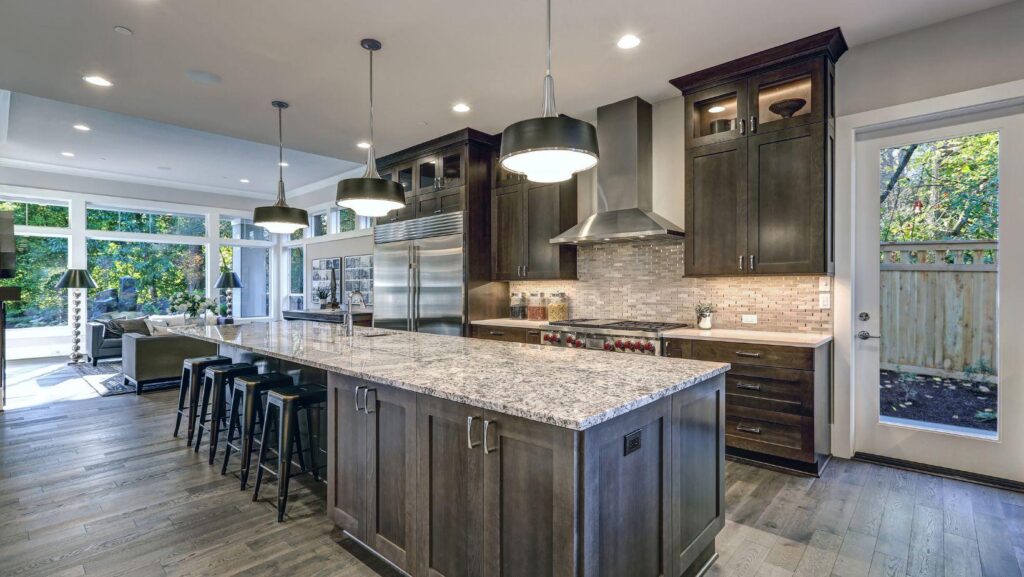
There is a moment in every well-designed kitchen when you reach for a cabinet door and something stops you — not hesitation, but appreciation. The pull beneath your fingers has weight. It has warmth. It feels, unmistakably, considered. That moment is the entire argument for investing in luxury cabinet hardware, and it’s one that homeowners, interior designers, and renovation professionals are making with increasing conviction.
For decades, cabinet hardware was treated as an afterthought — the last line item on a renovation budget, selected hastily from a rack of interchangeable chrome pulls. That era is definitively over. Today, hardware is understood as a design statement, a material choice, and in the finest kitchens, a form of functional sculpture.
Why Hardware Is the Jewelry of the Kitchen
The analogy is used often enough to have become a cliché, but it endures because it’s accurate: cabinet hardware is to a kitchen what jewelry is to an outfit. You can be dressed beautifully and still look undone without the right finishing pieces. Equally, a kitchen fitted with high-quality cabinetry and premium appliances can read as flat or unresolved if the hardware fails to meet the moment.
What elevates luxury cabinet hardware beyond its utilitarian counterparts isn’t merely the price point — it’s the material integrity, the manufacturing philosophy, and the design intent behind each piece. Solid brass, for instance, is far more than a finish. It is a material with physical density and a living surface that develops character over time. A brass pull installed today will look subtly different — deeper, more settled — in five years, and that patina tells the story of the space it inhabits.
The same is true of bronze, with its earthier, more antique tonality, and of polished or satin nickel, which brings a cooler, more architectural sensibility to contemporary kitchens. These are not interchangeable choices. Each finish carries a different emotional register, and the best designers select hardware the way they select stone or wood: with an eye toward how the material will live in the light, in the hand, and over time.
The Anatomy of a Great Cabinet Pull
Not all pulls are created equal, and understanding what separates the exceptional from the ordinary is useful before making any investment. The most important factors are: material composition, manufacturing method, finish quality, and ergonomic design.
Mass-market hardware is typically cast from zinc alloy — a lightweight metal that accepts plating well but lacks the weight and longevity of solid brass or bronze. Plated finishes, by contrast to true metal finishes, are susceptible to wear, particularly in high-use environments like the kitchen. Solid brass hardware, even as it ages, maintains its structural integrity and can be polished, treated, or allowed to develop naturally.
Manufacturing method matters equally. Machine-stamped hardware has a uniformity that reads as inexpensive, even when it isn’t. Hand-finished or artisan-produced hardware carries slight variations — in texture, in the transition between surfaces — that signal human attention. These are not imperfections; they are the evidence of craft.
Ergonomics, finally, is underappreciated. The best luxury cabinet hardware is designed so that the grip falls naturally under the fingers, the return clearance keeps knuckles from grazing the cabinet face, and the weight of the piece balances in the hand. These are details you don’t notice explicitly — you only notice their absence when they’re wrong.
Choosing a Finish That Works With Your Kitchen
The most common mistake homeowners make when selecting luxury kitchen hardware is choosing a finish in isolation — looking at a sample card or a product image without considering the full material palette of the kitchen. Hardware doesn’t exist in a vacuum. It exists alongside countertops, appliances, lighting fixtures, and cabinetry, and the relationships between these materials are what create cohesion or tension.
Brass hardware works beautifully with warm-toned kitchens: white oak cabinetry, honed Calacatta marble, unlacquered walnut, or warm white paint. It introduces richness without ostentation and reads as both traditional and contemporary depending on the form language of the pull itself. A slender, linear brass bar pull reads as modern; a more sculptural, voluminous knob reads as more classical. Brass is, in this sense, the most versatile finish in the luxury register.
Bronze skews warmer and more vintage in character. It pairs naturally with antique-white cabinetry, soapstone or leathered granite countertops, and kitchens with a farmhouse or European country sensibility. Carbon black hardware is the opposite — bold, graphic, and best suited to kitchens where contrast is the design strategy: black pulls against white shaker cabinets, or against natural wood, can be extremely striking when handled confidently.
Nickel — whether satin or polished — is the cooler-toned choice, and it bridges the gap between classic and contemporary effectively. It reads as cleaner and more restrained than brass, which makes it a strong candidate for more minimalist kitchen designs or spaces where the cabinetry itself carries strong visual texture.
Hardware as the Detail That Holds a Design Together
In twenty-plus years of writing about interior design and construction, I’ve seen the same phenomenon repeat in project after project: the rooms that feel most complete, most resolved, most designed are always the ones where the details were taken as seriously as the large-scale decisions. The hardware selection in a kitchen is one of those details — small in scale, enormous in cumulative effect.
For those looking to explore what’s available at the top of the market, the curated offerings at Mi & Gei’s luxury kitchen hardware collection are worth serious attention. The studio’s approach — solid brass construction across a range of sculptural forms, available in brass, bronze, carbon black, champagne bronze, satin nickel, and polished nickel — represents exactly the kind of considered, artisan-led design philosophy that separates lasting hardware from trend-driven product. Their knobs, cabinet pulls, kitchen rails, and towel accessories are designed to work as a cohesive system, which matters enormously when you’re furnishing an entire kitchen rather than replacing a single pull.
Ultimately, the best luxury cabinet hardware doesn’t announce itself. It simply makes the kitchen feel finished — and then, every time you reach for a cabinet door, it reminds you why that finish was worth getting right.
About The Author

 Kenneth Stevenson’s Interior Design Articles
  Your Complete Guide to Building a Healthier Room for Better Sleep
  Make Your Bathroom Pop: Quick, Funky Curtain Ideas To Rescue Boring Spaces