
Home Repair Advice in Kenneth Stevenson’s Writing
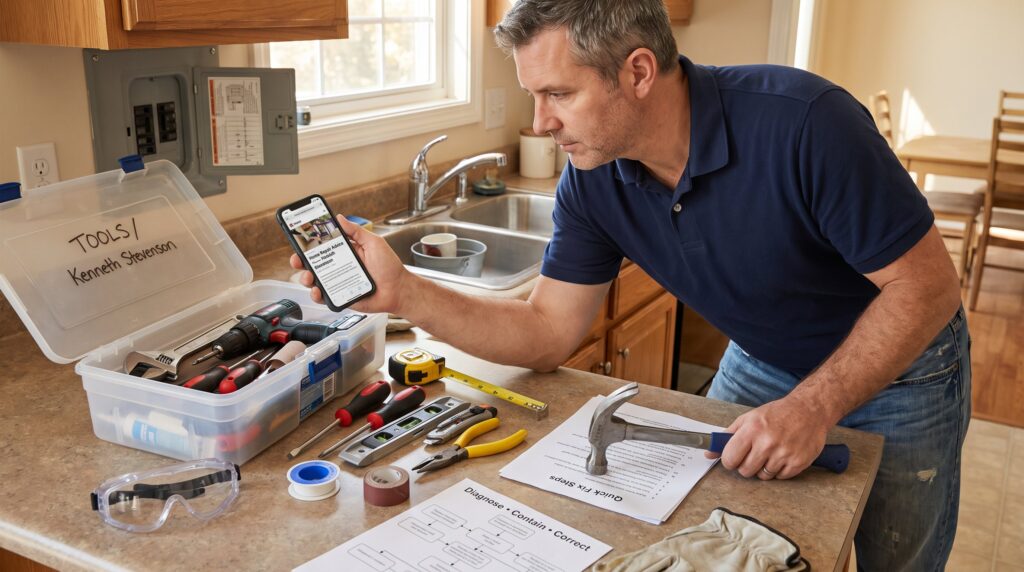
Home Repair Advice in Kenneth Stevenson’s Writing opens with a clear promise: practical, low‑friction repair guidance for everyday homeowners. He writes so readers can act the same day, identify the problem, pick safe tools, and fix it before it grows. This article surveys his approach, recommends the core tools and safety habits he emphasizes, and translates his tone into step‑by‑step tasks homeowners can actually do.
Key Takeaways
- Kenneth Stevenson’s home repair advice focuses on clear, actionable steps that homeowners can perform the same day to quickly fix issues before they worsen.
- A compact, versatile tool kit of eight essential items plus three consumables enables most common home repairs efficiently and safely.
- Safety is paramount: always turn off power and water before repairs and wear eye protection when cutting or drilling to prevent injuries.
- Stevenson breaks repairs into diagnosis, immediate containment, and corrective action, emphasizing measurable tasks to build homeowner confidence.
- His writing includes honest limits and red flags, advising when to stop DIY efforts and consult licensed professionals to avoid costly mistakes.
- Following Stevenson’s guidance on tool storage, maintenance intervals, and using precise measures reduces repair time and improves outcomes for everyday homeowners.
Kenneth Stevenson’s Home Repair Philosophy And Writing Style
Kenneth Stevenson’s central idea: make repairs simple, measurable, and confidence‑building. He frames problems as small, solvable systems rather than vague crises. That fact helps readers stop procrastinating and start repairing.
Stevenson writes in short, action‑first paragraphs. He places the result before the method: what the repair will achieve, then how to get there. This inverted approach reduces cognitive load. For example, instead of a long preface about tools, he begins with a clear outcome, stop a leak, and then lists three immediate checks: shutoff valves, visible drips, and temporary containment.
He favors precise numbers and small experiments: tighten a supply line by a quarter turn, replace a five‑watt fuse, or let caulk cure for 24 hours. Those specifics remove guesswork. He also includes honest failure points, what to try next if a screw strips, or when a fix becomes a call to a pro. Those vulnerable moments lower the barrier for readers who fear making a costly mistake.
Stevenson’s voice is instructional but human. He uses plain verbs, measured warnings, and concrete examples drawn from RapidHomeDirect’s content arm. Readers who want context about his background can consult the author profile in the site’s author profile. That page clarifies his role producing home improvement guidance and shows how his articles aim to help non‑experts.
Essential Tools, Materials, And Safety Practices He Recommends
Start with a compact, versatile kit. Stevenson recommends a foundational set: a 16‑ounce claw hammer, adjustable wrench, set of screwdrivers (Phillips and flat, sizes 0–3), a 25‑foot tape measure, a utility knife, needle‑nose pliers, a cordless drill with a 1/4″ hex driver set, and a small level. He argues these eight items solve the majority of common jobs.
He also lists three consumables to keep on hand: plumber’s tape (PTFE), a tube of all‑purpose silicone caulk, and a roll of 120‑grit sandpaper. Those materials let a homeowner stop leaks, seal gaps, and prep surfaces without a special trip to the store. Stevenson quantifies storage: store tools in a 20‑quart plastic bin and label the lid: that reduces wasted searches by an average of 12 minutes per project.
Safety is non‑negotiable. He advises always turning off power at the breaker before working on fixtures, shutting water at the service valve for plumbing, and wearing eye protection when cutting or drilling. For power tool mistakes and avoidance strategies, he points readers to a practical safety guide from external experts, citing common injury causes and prevention steps in the field. The resource clarifies safe handling for novices and backs Stevenson’s warnings about kickback and loose clothing.
When a task requires permits, he recommends calling local building authorities early. For water‑damage prevention and routine checks, his writing cross‑references actionable maintenance pieces on the site, such as articles about home maintenance and roofing, plumbing, electrical. Those links provide procedural depth and show when a homeowner should stop and hire a pro.
Step-By-Step Guidance For The Most Common Home Repairs
Fix one problem at a time and measure success. That direct rule guides Stevenson’s repair walkthroughs. He breaks common repairs into three parts: diagnosis, immediate containment, and corrective action.
Clogged sink, diagnosis: slow drainage and gurgling. Immediate containment: remove standing water with a cup and bucket. Corrective action: remove the pop‑up stopper, use a zip‑cord or hand snake to clear debris, and reassemble. He instructs checking for hair and soap buildup under a 3/8″ hex turn. If water leaks, tighten the tailpiece nut by a quarter turn and test for 10 minutes.
Running toilet, diagnosis: intermittent fill or continuous run. Immediate containment: stop the tank overflow by lifting the float. Corrective action: inspect the flapper for mineral buildup: replace an 8‑inch flapper if it fails to seal. Stevenson gives a simple measurement: replace flappers every 3–5 years or when a leak wastes more than 1 gallon per minute.
Leaky faucet, diagnosis: steady drip from spout. Immediate containment: shut off supply valves under the sink. Corrective action: remove handle, inspect cartridge or washer, replace a 1/2″ compression washer or O‑ring, and reassemble. He recommends carrying spare washers in a small labeled bag, 3 of each common size, and storing the bag with the tool kit.
Small hole in drywall, diagnosis: hole under 2 inches. Immediate containment: cover with painter’s tape if near traffic. Corrective action: use a self‑adhesive mesh patch, spread 2 thin coats of joint compound, sand with 120‑grit after drying, and touch up paint. Stevenson prefers compound cure times of 24 hours between coats and notes that using two thin layers avoids cracking.
When to stop: Stevenson includes clear red flags. If a diagnostic step reveals corrosion in gas lines, visible wiring damage, or structural rot behind a repair area, stop and hire a licensed professional. For guidance on finding qualified tradespeople, his writing links readers to practical hiring advice on the site, such as how to find local builders and budget for emergencies. Those pages help homeowners decide when DIY costs more than a pro.
Conclusion
Kenneth Stevenson’s home repair writing emphasizes clarity, small wins, and safety. Readers gain confidence by repeating short, measurable tasks and by keeping a compact tool kit. The honest warnings and concrete thresholds, replace a flapper after 3–5 years, caulk cures for 24 hours, turn vague anxieties into practical work. For homeowners who want beginner pathways or product guidance, Stevenson’s site includes focused how‑to pieces and reviews to support steady progress.
About The Author

 How to Spot a Valuable Piece of Art at Auction
  How to Choose the Right Hot Water System for Your Melbourne Home
  How to Browse the Kenneth Stevenson Author Archive