
Outdoor Tile Trends Homeowners Are Choosing Instead of Plain Concrete in 2026
Ask any landscape designer what’s happening on residential outdoor projects right now, and you’ll hear the same thing: concrete is losing.
Not because it stopped working, but because homeowners have seen enough of it. The grey slab that once defined a patio, pool surround, or garden path has become the default that no one actually chose – it was simply the path of least resistance.
That calculation is shifting. A growing number of homeowners are specifying surface materials with the same care they’d apply to a kitchen floor or a bathroom wall. And the results are genuinely striking: outdoor spaces that look designed rather than poured.
Below is a clear-eyed look at the outdoor tile trends gaining ground in 2026 – what’s driving them, what they demand from an installation standpoint, and which surface categories are worth understanding before you commit.
1. Handcrafted terrazzo is moving outside
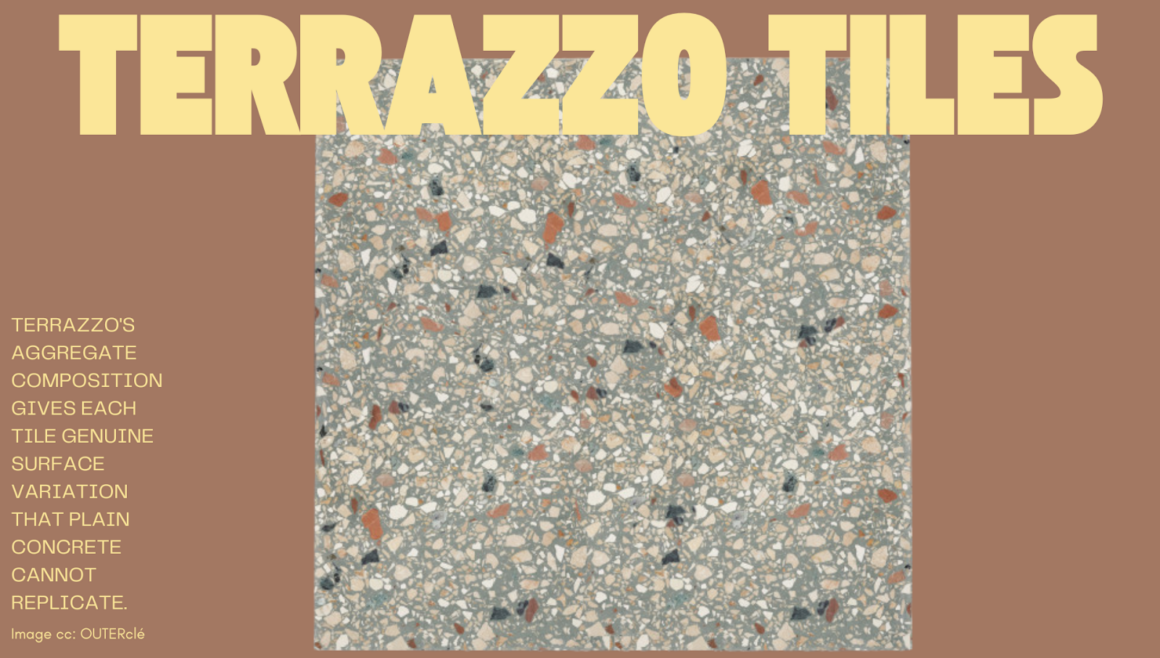
Terrazzo spent years as a lobby material. In 2026, it’s firmly on the patio.
The shift makes material sense: modern exterior terrazzo tiles are engineered with a higher cement-to-aggregate density than their interior counterparts, giving them the freeze-thaw resistance and slip coefficient (DCOF above 0.42 for wet surfaces) needed to perform through seasonal change.
The visual appeal is part of the story, but so is the longevity argument. A properly sealed terrazzo surface laid on a stable substrate with full mortar coverage can hold its finish for decades without the surface crazing that affects cheaper alternatives.
For homeowners exploring material options, the perfect outdoor tiles from OUTERcle include terrazzo selections from the Dolce Vita collection, engineered specifically for outdoor performance with a composition that develops natural patina rather than visible degradation over time.
2. Cement tile is finding its place in outdoor living rooms
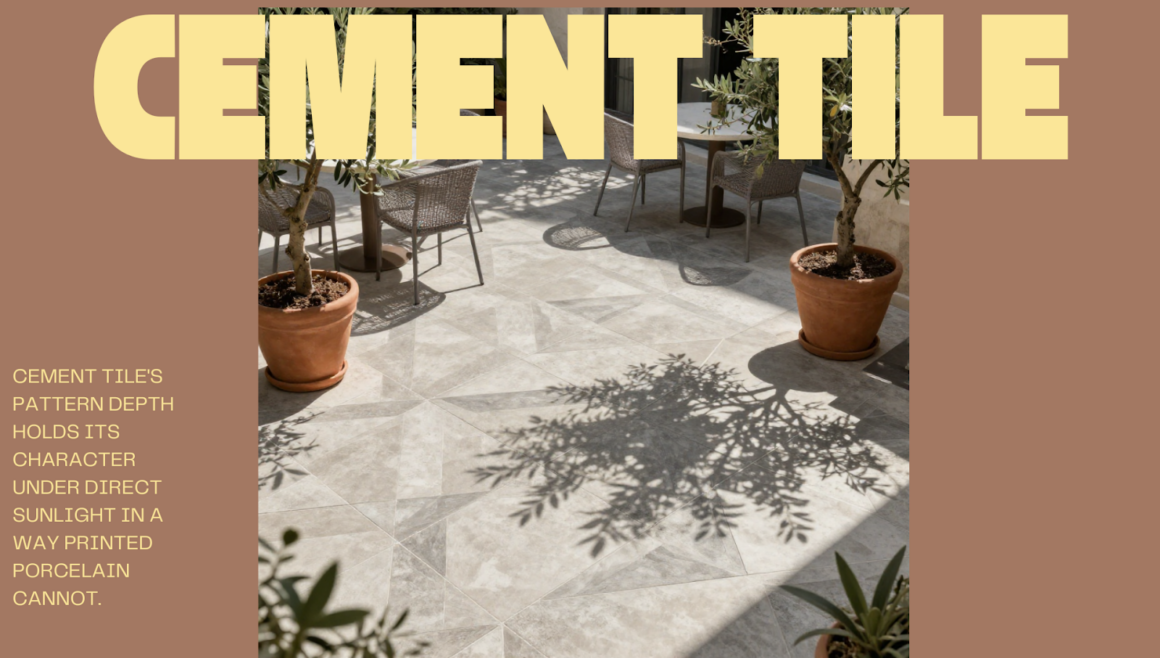
The outdoor living room concept – the idea that a well-designed patio functions as a proper room – has pushed homeowners toward surfaces that communicate intention. Cement tile fits that brief. Its handmade production process, involving pigment pressed directly into a cement body, means colour is structural rather than applied. It doesn’t wear off; it wears in.
The installation requires attention. Cement tile needs a fully cured, dry substrate, typically a mortar bed or stable concrete slab, to avoid differential movement cracking. Expansion joints every 8-10 feet are standard practice for exterior applications. And sealing at installation, then annually, is non-negotiable for high-traffic zones.
The Cement Origami collection from OUTERcle demonstrates what happens when geometric precision meets handmade variation. Each tile’s slight surface irregularity creates depth under raking sunlight that flat-pressed alternatives simply cannot produce.
3. Reclaimed-look brick and clay pavers
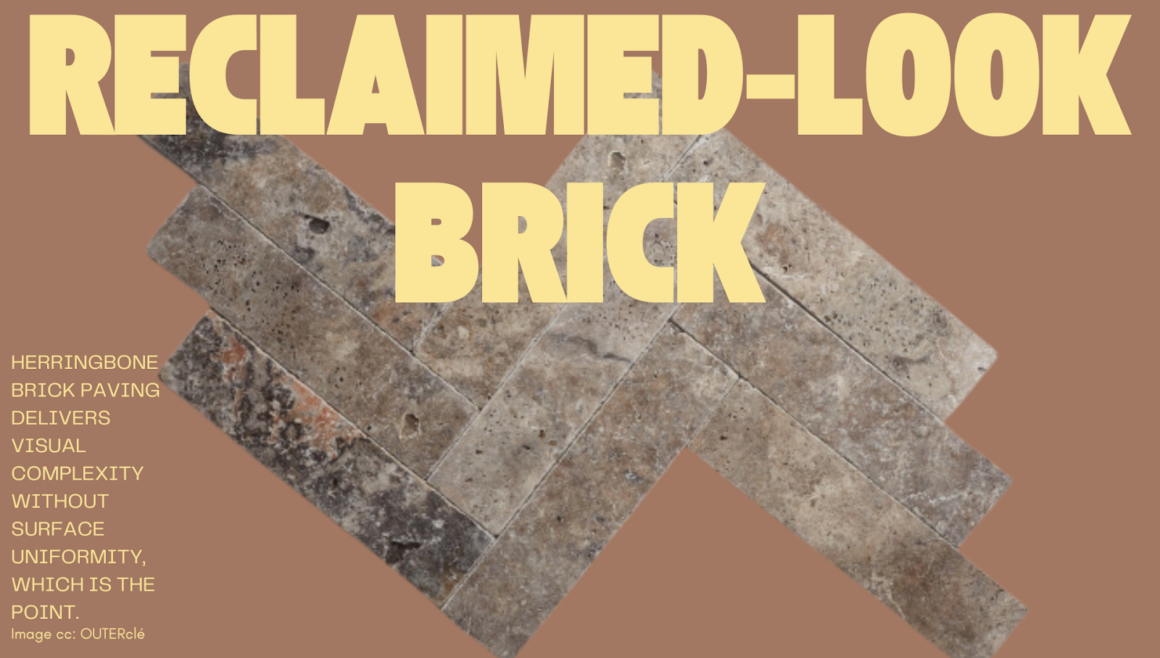
Reclaimed brick has a warmth problem: actual reclaimed bricks vary too much in dimension to tile cleanly, and genuine antique stock is expensive and often structurally inconsistent.
The solution the market has converged on is reproduction brick tile – full-thickness or veneer formats that replicate aged texture and firing variation without the dimensional headache.
OUTERcle’s Brickworks and Fezbrick collections sit squarely in this category. The former draws on classic European coursing aesthetics; the latter references North African brick tradition with a more irregular surface finish. Both are rated for exterior use and can be installed in standard stretcher bond, herringbone, or basket weave patterns depending on the visual weight required.
From a sequencing standpoint, brick pavers benefit from a sand-set or dry-mortar base rather than a full wet mortar bed when used in garden paths, as it allows for minor ground movement without cracking. For more information on exterior paving best practices, the home exterior design guidance covers material selection principles relevant to outdoor renovation decisions.
4. Pool surrounds and waterline tile are getting specific
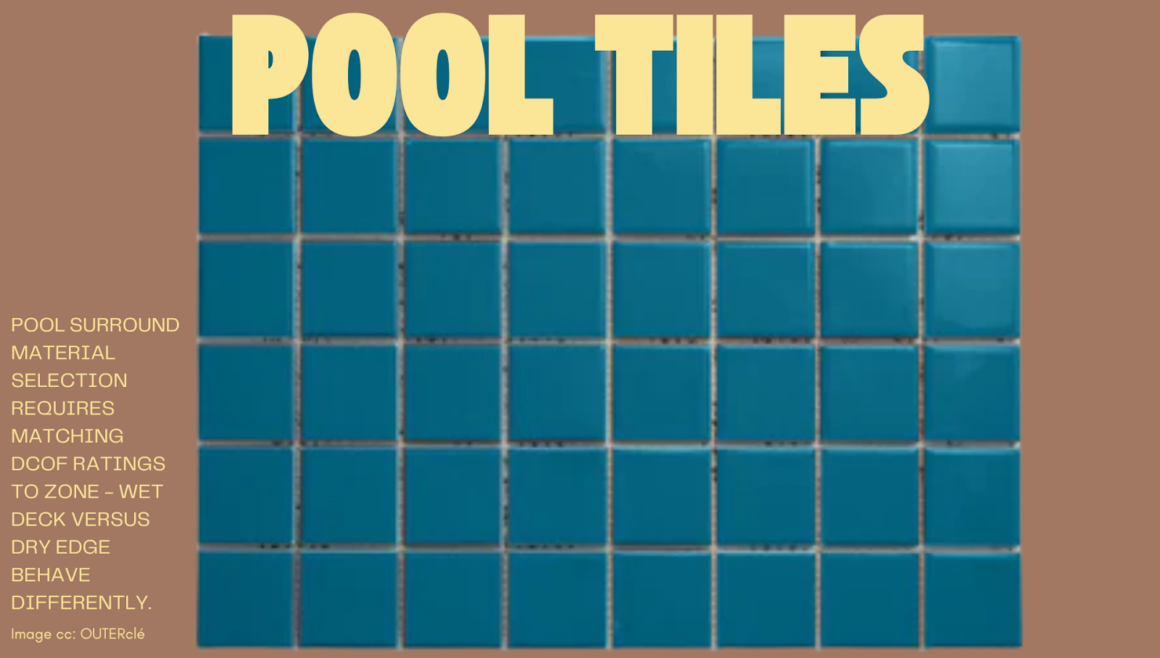
The pool surround is one of the most technically demanding outdoor tile applications, and it’s also one where the visual payoff of getting the material right is most visible. Plain concrete decking around a pool is functional. Tiled decking is finished.
The key material decision is matching surface to zone. The poolside deck (the dry walk area) requires a DCOF rating above 0.42 and a surface texture that drains quickly. The pool coping – the cap tile at water’s edge – needs to be frost-resistant if the pool will sit through winter.
The waterline tile, the strip that sits at the waterline inside the pool, is exposed to constant chemical and thermal cycling and benefits from glass or densely fired ceramic for minimal absorption.
5. Facade tile is graduating from feature walls to full exteriors
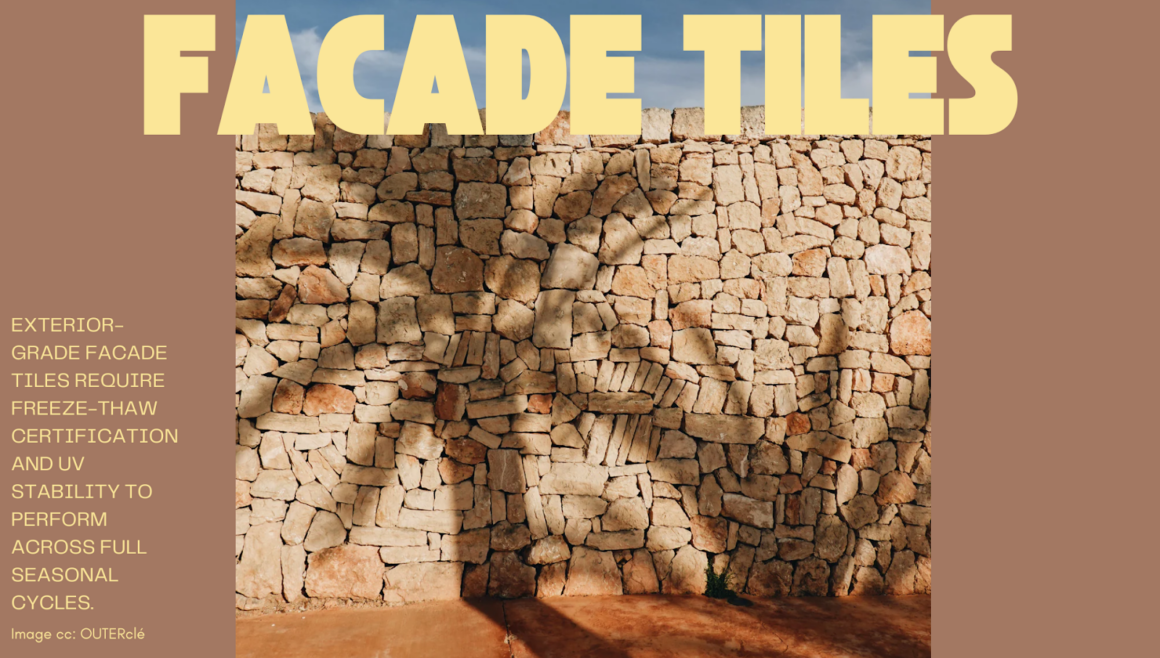
The most significant shift in outdoor tile use this cycle isn’t on the ground – it’s on the wall. Homeowners, particularly those working on contemporary exterior renovations, are looking at handcrafted facade tile as an alternative to painted render or plain masonry.
The specification requirements are strict: facade tile must carry a freeze-thaw rating, UV colour stability data, and a substrate bonding spec that accounts for wall movement. Products that fail on any of these points will show failure within two to three winters. This is precisely where small-batch, production-controlled tile has an advantage over high-volume ceramic.
OUTERcle’s FACADE collection is engineered for this application, with cementitious and mineral-based compositions that develop natural patina without surface degradation.
What to ask before committing to outdoor tile
Outdoor tile decisions are harder to reverse than interior ones, which makes the initial specification process worth slowing down. Before committing to any surface, verify the following:
- DCOF (Dynamic Coefficient of Friction): Check the wet surface rating. Anything below 0.42 for outdoor wet zones is a safety liability.
- Freeze-thaw rating: Any tile in a climate with sub-zero temperatures needs a certified freeze-thaw cycle rating, typically expressed as the number of cycles the tile can undergo without failure.
- Absorption rate: Dense tiles (less than 0.5% water absorption) perform best in pool surrounds and high-moisture zones. Higher-absorption tiles need compatible sealing and drainage planning.
- Substrate compatibility: Confirm mortar bed requirements, substrate flatness tolerances, and expansion joint spacing with your tile supplier before installation begins.
- Order samples before committing: Handmade outdoor tile will show natural variation between samples and delivered batches. Order samples from the actual production run when possible.
The move away from plain concrete is less about aesthetics than it sounds. It’s about choosing materials that have a defined performance story – surfaces that will behave predictably, age gracefully, and reward the investment rather than simply fill the space.
That shift also reflects a bigger homeowner mindset: people are not just choosing what looks stylish today, but what reduces upkeep tomorrow, especially in outdoor spaces where backyard maintenance projects homeowners often overlook can turn into expensive fixes later.
About The Author

 How to Safely Pressure Wash Roofs and Gutters
  How to Plan Exterior Lighting for Safety and Style
  Why Roof Maintenance Is Important After Major Storms?