
The Psychology of Space: What Car Interiors Teach Us About Designing Smarter Homes
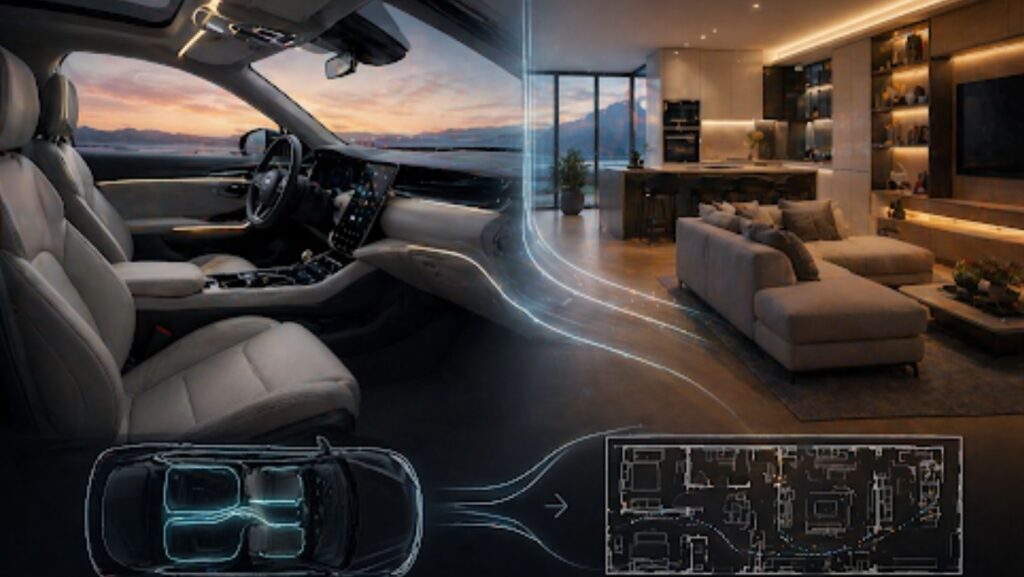
For much of modern design history, cars and homes have been treated as separate disciplines. One belongs to engineering and mobility; the other to architecture and permanence. But that boundary is becoming increasingly blurred.
As vehicles evolve into highly optimised, user-centred environments, their interiors are beginning to influence how designers think about domestic spaces. Not in a superficial way, but in terms of layout logic, human behaviour, and the psychology of how people interact with constrained environments.
A car cabin is one of the most tightly designed spaces most people ever experience. Every centimetre is intentional. Every interaction is considered. And in that constraint lies a surprising amount of insight into how smarter homes might be designed.
The Cabin as a Study in Efficiency
Car interiors are fundamentally exercises in spatial efficiency. Unlike homes, there is no excess room for purely aesthetic or redundant features. Everything must serve a function, often multiple functions at once.
Controls are placed within immediate reach of the driver. Storage is integrated into otherwise unused gaps. Displays are positioned to minimise distraction while maximising visibility. Even seating geometry is engineered to balance comfort with space constraints.
This intense optimisation creates a kind of design clarity. There is no ambiguity about how a space is meant to be used. That clarity is something residential design has traditionally struggled with, especially in smaller urban homes.
The lesson is not about making homes feel like cars, but about prioritising intentionality in layout decisions.
Human-Centred Flow and Movement
One of the most overlooked aspects of car interior design is flow—the way a person moves through and interacts with the space.
In a well-designed cabin, movements are minimal and intuitive. Adjusting mirrors, changing climate settings, or accessing storage does not require breaking posture or diverting attention for long periods. Everything is designed around natural motion patterns.
This concept translates directly into home design. Kitchens, for example, increasingly adopt “work triangle” logic, where sink, stove, and fridge are positioned to minimise unnecessary movement. Open-plan living spaces similarly attempt to create smooth transitions between zones.
The underlying principle is simple: the fewer unnecessary steps required to complete an action, the more efficient and comfortable the environment becomes.
Digital Layers and Invisible Infrastructure
Modern cars are increasingly defined not just by physical design, but by digital systems embedded within them. Touchscreens, voice controls, driver profiles, and automated settings all operate as invisible layers shaping how the space functions.
This idea is now migrating into home design through smart systems. Lighting, heating, security, and entertainment are no longer fixed installations—they are responsive environments that adapt to user behaviour.
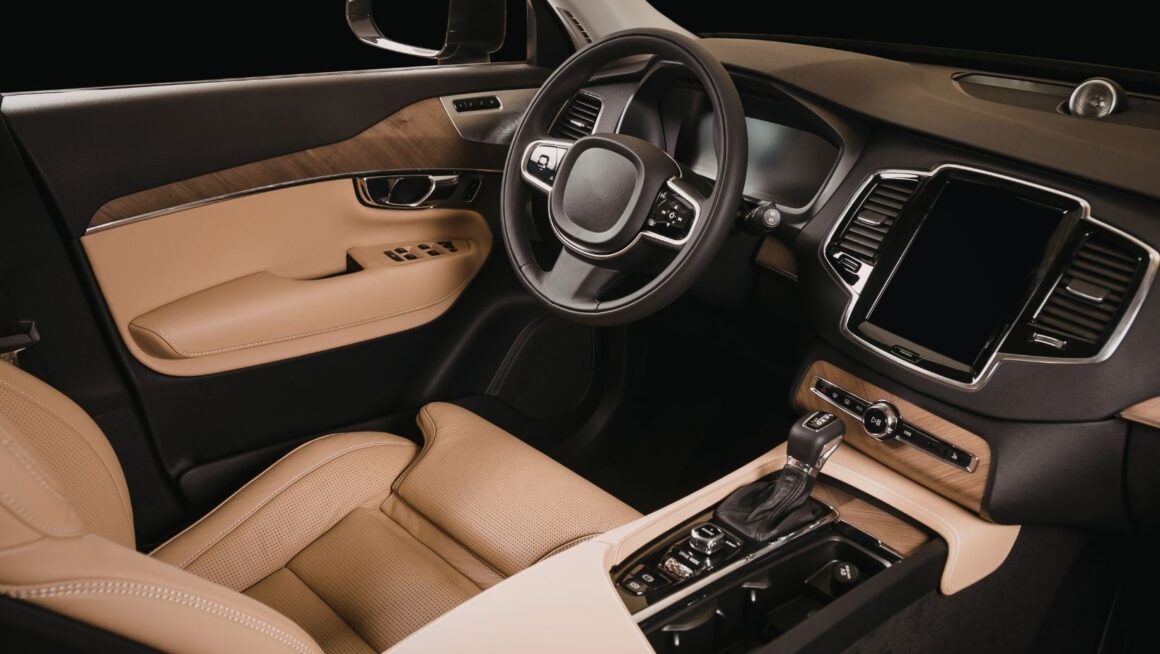
What cars demonstrate particularly well is integration. In a well-designed vehicle, digital systems do not feel separate from physical controls; they are unified. A single interface may manage multiple functions seamlessly.
Homes are now moving in the same direction, where complexity is hidden beneath simplicity of interaction.
Personalisation Within Constraints
Despite their tight spatial limits, car interiors are highly personal environments. Seat positions, driving modes, ambient lighting, and infotainment layouts can often be tailored to individual preferences.
This balance between constraint and personalisation is especially relevant to modern housing. As living spaces become smaller in many urban areas, the challenge is not just about reducing size, but about maintaining individuality within that reduction.
Cars demonstrate that limitation does not necessarily reduce comfort or identity. Instead, it can sharpen design decisions and make personalisation more meaningful.
Even exterior elements of vehicle ownership contribute to this sense of identity. In the UK, for example, vehicle presentation choices—from styling details to registration aesthetics—form part of how drivers express individuality within a regulated framework. Within this broader culture of automotive identity, companies like Number 1 Plates operate in the space where design, presentation, and personal expression intersect in subtle but visible ways.
The underlying principle carries over into home design: identity does not require excess space, but thoughtful integration.
Material Selection and Sensory Experience
Car interiors are also carefully designed sensory environments. Materials are chosen not just for durability, but for tactile experience, temperature response, and visual consistency.
Soft-touch surfaces, textured grips, acoustic insulation, and controlled lighting all contribute to how the space feels during use. The aim is to reduce friction—not just physical, but sensory.
In residential architecture, similar thinking is increasingly important. Hard, reflective surfaces may look modern, but they can also create acoustic harshness. Conversely, carefully chosen textures and materials can make compact spaces feel more comfortable and grounded.
The car cabin demonstrates that sensory design is not decorative—it is functional. It shapes mood, attention, and even perceived spaciousness.
The Psychology of Control and Comfort
One reason car interiors feel so cohesive is that they are designed around a single user context: control in motion.
Unlike most rooms in a house, a car is an environment where the user is both occupant and operator. This dual role shapes everything from layout to interface design. There is a constant balance between accessibility and safety, engagement and simplicity.
Homes, by contrast, are multi-user environments with shifting roles. Yet there is still something to learn from the clarity of purpose found in automotive design.
When a space has a clearly defined function, it becomes easier to design around human behaviour. Confusion decreases. Decision fatigue reduces. Interaction becomes more intuitive.
Compact Design and Urban Living
As urban housing becomes more compact, especially in major cities, the relevance of automotive-inspired design principles increases.
Small apartments and studio spaces face similar constraints to vehicle cabins: limited square footage, the need for multifunctional areas, and the importance of efficient storage.
Foldable furniture, modular layouts, and integrated storage systems all reflect principles long established in automotive design. The idea that space should adapt rather than remain static is central to both domains.
In this sense, the car interior is not just a transport environment—it is a prototype for compact living.
Emotional Design and Familiarity
Another overlooked aspect of car interiors is emotional consistency. Drivers often develop strong attachments to their vehicles not just because of performance, but because of familiarity.
The position of controls, the feel of seating, and even the sound profile of a cabin contribute to a sense of continuity. This emotional stability is something that residential design increasingly seeks to replicate.
Homes that feel coherent—where materials, layout, and interaction patterns remain consistent—tend to feel more comfortable over time. Disjointed design, even if visually interesting, can create subtle cognitive friction.
Cars demonstrate how repetition and predictability in design can enhance emotional comfort.
Conclusion: Designing for Behaviour, Not Just Space
Car interiors offer a clear reminder that good design is not simply about filling space—it is about understanding behaviour within that space.
Every element of a vehicle cabin is shaped by necessity, but also by an understanding of how humans interact with constrained environments. That combination of efficiency, clarity, and adaptability is increasingly relevant to how we think about homes.
As living spaces evolve to become more compact, flexible, and digitally integrated, the lessons from automotive design will only become more valuable. Not because homes should resemble cars, but because both must solve the same fundamental challenge: how to make limited space feel intuitive, comfortable, and personal.
In that sense, the car interior is less a reference point and more a preview—of how design continues to move toward environments shaped not by size, but by intelligence.
About The Author

 Itzhak Ezratti on Building Communities That Last: A Founder’s Philosophy on
Long-Term Development
Itzhak Ezratti on Building Communities That Last: A Founder’s Philosophy on
Long-Term Development  Why Spartanburg Homeowners Keep Getting the Same Drain Clog and What It Could Mean
  Why Mobility Matters in the Kitchen